
Supporting Children and Adolescents
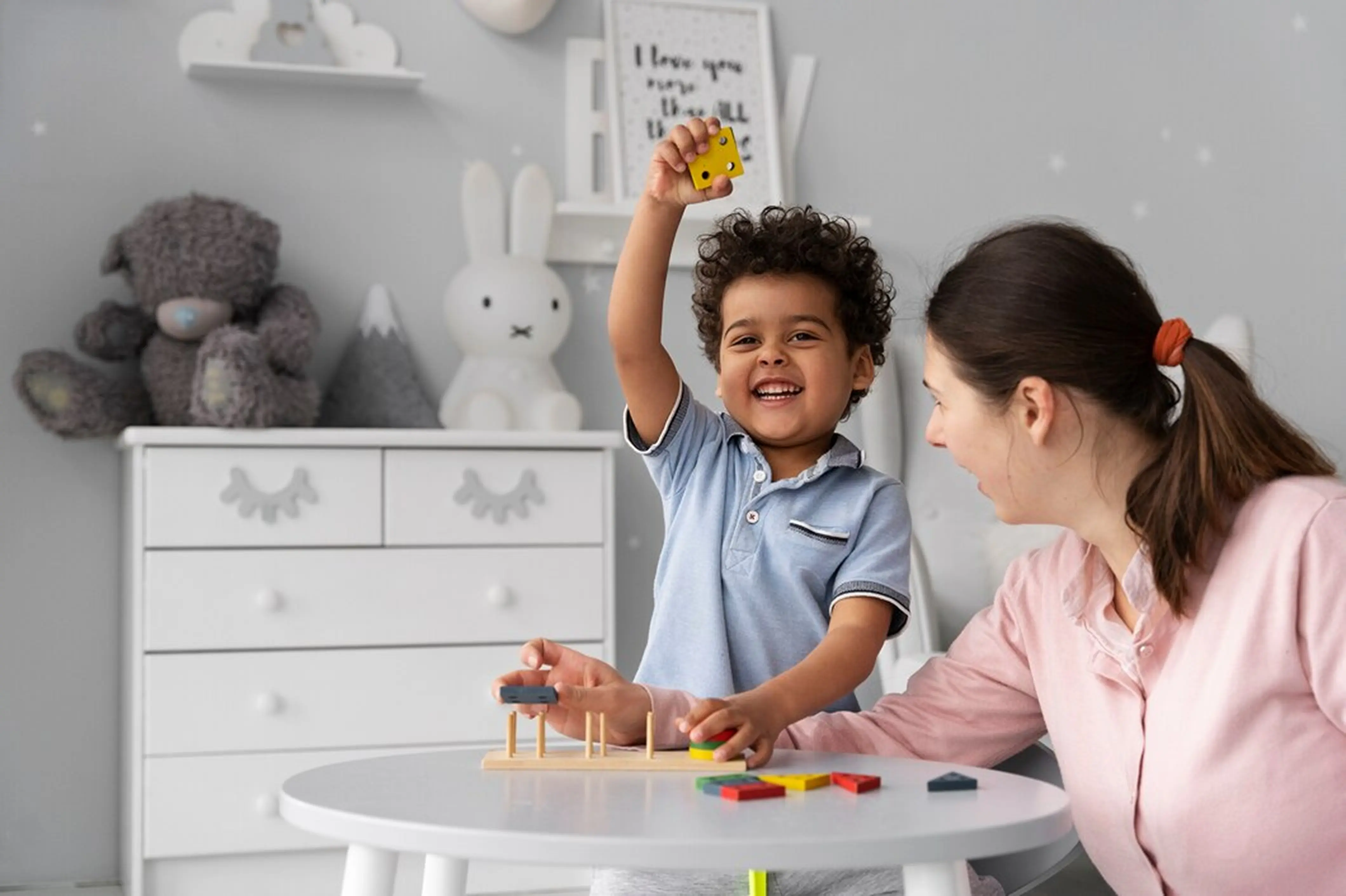
Supporting children and adolescents, therapy for your well-being, has become an essential resource in the face of the challenges of youth development. Indeed, adolescence represents "a period of intense changes on every level: emotional, hormonal, bodily, cognitive, social, neuronal..." This critical phase can generate difficulties that, without appropriate support, affect the young person’s daily life in its school, family, and relational dimensions.
We find that adolescent therapy offers a safe space to get through these storms. However, it is essential to "distinguish normative difficulties from more serious problems" in order to provide tailored support. At Hello Soins, we facilitate connections with specialized practitioners who understand the issues of adolescence, with problems and solutions adapted to each situation. Our premium platform makes it easy for you to access these professionals, while benefiting from personalized follow-up and optimal availability.
In this article, we explore the specific features of therapeutic support for children and adolescents, from understanding their needs to approaches adapted to their development.
Understanding the specific needs of children and adolescents
Young people’s growth journey is marked by significant transformations, sometimes requiring appropriate support. At Hello Soins, we recognize the importance of understanding these specific needs in order to offer suitable therapeutic support.
Developmental differences between child and adolescent
Childhood and adolescence represent two distinct stages with unique challenges. Between ages 6 and 10, the child develops language and reasoning abilities, allowing school learning and social skills to progress. During this period, a sense of competence and self-esteem are built.
Adolescence, generally beginning around age 12, marks an important break. This phase is characterized by growing independence, experimentation, and identity concerns. One crucial aspect concerns brain development: certain areas become particularly sensitive to emotional stimuli, while the regions responsible for decision-making mature more slowly. This gap often explains impulsive behaviors and difficulty anticipating consequences.
When should you consult a therapist?
Certain situations should alert you and prompt you to seek professional support:
-
After a distressing experience: parents’ separation, bereavement, accident, moving house
-
In the face of a sudden change in behavior: aggression, withdrawal, frequent crying
-
In case of persistent school difficulties or recurring conflicts with peers
-
When your child expresses negative thoughts about themselves
It is important not to wait for problems to worsen. An initial consultation does not necessarily commit you to prolonged therapy, but it does make it possible to obtain an objective opinion on the situation.
Signs of distress to look out for
In children, suffering manifests differently depending on age:
For young children, be attentive to sleep disorders, regression to immature behaviors such as bedwetting, or social isolation.
In adolescence, repeated risk-taking behaviors, somatic complaints (headaches, abdominal pain), or a sudden lack of interest in previously enjoyed activities may signal distress. The inability to cope with daily tasks, such as going to school, is also a warning sign.
Our Hello Soins platform connects you with practitioners specializing in support for children and adolescents, offering a premium service for personalized follow-up and optimal availability in the face of these delicate situations.
The essential role of parents in therapy
In the world of child and adolescent therapy, parents play a fundamental role. Once considered outside the process, they are now recognized as essential care partners, part of the solution rather than the problem.
Who makes the request for a consultation?
Unlike adult therapy, the particularity of consultations for children lies in the very initiation of the process. In fact, it is usually the parents or someone close to the child who make the decision and carry out the first steps up to the meeting with the therapist.
The first contact often takes place by phone, with the mother frequently being the one who makes the initial request. At this stage, parents express their expectations and usually ask for a change in the behaviors or symptoms shown by the child. These expectations are largely determined by their own threshold of tolerance for their child’s behaviors.
Creating a therapeutic alliance with parents
Studies show that between 40 and 75% of children drop out of psychotherapy before it is considered complete. That is why the therapeutic alliance with parents is a decisive factor in treatment success.
Research clearly shows that this alliance is directly predictive of children’s outcomes, particularly their social adjustment. The first appointment plays a determining role in opening up a framework for psychological work that will gradually become a true therapeutic alliance.
At Hello Soins, we facilitate this crucial first contact by offering an intuitive platform that allows parents to quickly identify the practitioner suited to their needs and to begin this therapeutic process with peace of mind.
Including parents without encroaching on the child’s space
The balance to find is delicate: how can parents be included while respecting the child’s own therapeutic space? It is generally recommended to organize regular meetings with parents, about every three months, mainly at the beginning of psychotherapy.
These discussions provide a place where parents can feel understood in their questions, actively take part in the progress of therapy, and maintain a relationship of trust with the therapist. However, it is essential that the child’s psychotherapy preserves a degree of confidentiality regarding its course and content, thus allowing the therapist to play the role of a containing third party.
Our Hello Soins platform supports this process by facilitating communication between parents and practitioners while respecting this fundamental balance for successful therapy.
The therapeutic framework: safety, confidentiality, and adapted tools
Putting in place a solid therapeutic framework is the foundation of any effective support for children and adolescents. This framework, far from being rigid, is adjusted to the specific needs of each young patient.
Adapting the frequency and duration of sessions
For therapy to be effective, it requires an appropriate rhythm. Sessions generally last between 1 hour and 1 hour 30 minutes, depending on the techniques used. The frequency varies according to age and needs: a weekly session is often recommended at the start of therapy, then may evolve into a twice-monthly rhythm.
For children and adolescents (ages 3 to 17), an initial program of 1 to 5 sessions, renewable once, may be offered. This flexibility makes it possible to adjust therapeutic follow-up according to the young person’s progress.
Confidentiality: balancing the child and the parent
The issue of confidentiality represents a particular challenge in therapy with young people. Professional secrecy ensures that exchanges remain confidential, including from parents. This protection is essential so that the child or adolescent can express themselves freely.
However, this confidentiality is not absolute. In the event of danger to the child or others, the therapist is obliged to act to ensure their protection. This balancing act consists of maintaining the young person’s trust while continuing to exchange with parents about general progress.
Tools used: play, drawing, speech, role-play
With children, expression happens less through speech than through creative means. Therapeutic play allows the child to express their emotions and to "re-enact" their daily life in front of an adult who is fully present. Drawing is also a valuable support, making it possible to put on paper an inner world that is difficult to put into words.
For adolescents, other approaches are favored: speech, role-playing, stress-management exercises, and positive challenges between sessions. These tools correspond to their need to push themselves in order to feel alive.
Therapist’s stance: presence, listening, adjustment
The therapist’s stance is decisive. Their authentic and supportive presence helps create a reassuring bond. Active listening and involvement in the therapeutic process encourage the emergence of deep emotional content.
At Hello Soins, we connect patients with practitioners specialized in these approaches, thus offering a premium service that facilitates access to therapies adapted to the specific needs of children and adolescents.
Supporting adolescence: between autonomy and vulnerability
Faced with the particular challenges of adolescence, therapeutic support requires specific approaches. Our Hello Soins platform connects young people with practitioners specialized in this crucial stage of development.
Adolescence: a period of identity restructuring
Adolescence represents an intense phase of identity formation. The young person constantly oscillates between the need for independence and the need for protection. This duality sometimes creates conflictual situations, particularly with authority figures.
Maintaining a framework while respecting autonomy
In therapy, the balance is delicate: providing a reassuring framework while recognizing the need for autonomy. The adolescent must feel that they retain some room for freedom in the therapeutic process. Thus, involvement in decisions concerning their therapy strengthens their commitment.
Supporting without judging: the therapist’s adjusted stance
The ideal therapist stance combines kind listening and authenticity. Adolescents quickly detect any form of hypocrisy or judgment. In addition, too directive an attitude risks provoking rejection and resistance.
Adolescent therapy: how can a bond of trust be created?
Establishing trust remains the major challenge. This involves respecting the young person’s pace and acknowledging their voice. At Hello Soins, we facilitate connections with practitioners trained in these specific issues, offering availability and personalized follow-up to effectively support this period of vulnerability.
Conclusion
Therapeutic support for children and adolescents is certainly a complex but essential challenge for their harmonious development. Each stage of growth brings its own upheavals, requiring specific and adapted approaches. Parents play a primary role in this process, becoming true care partners rather than mere outside observers.
We have also seen how the therapeutic framework forms the foundation of effective care. Confidentiality, age-appropriate tools, and the therapist’s adjusted stance together create that safe space where the child can express their difficulties. Moreover, adolescence requires particular attention, constantly oscillating between respect for emerging autonomy and the maintenance of a protective framework.
Faced with these challenges, Hello Soins positions itself as a valuable ally for families. Our premium platform facilitates connections with practitioners specialized in supporting younger patients. Parents thus benefit from simplified access to qualified professionals, while our practitioners gain visibility and efficiency in managing their appointments.
Unlike a traditional search, our service offers optimal availability and personalized follow-up. Thanks to our integrated chat, communication between sessions becomes fluid, reinforcing the therapeutic alliance so fundamental to treatment success.
Ultimately, therapeutic support for a child or adolescent represents a valuable investment in their future. Taking care of mental health from an early age makes it possible to develop lasting resources in the face of life’s uncertainties. At Hello Soins, we are committed to making this journey more accessible and reassuring for all families, by building bridges between those seeking help and those who can provide it.


