
Feldenkrais Method
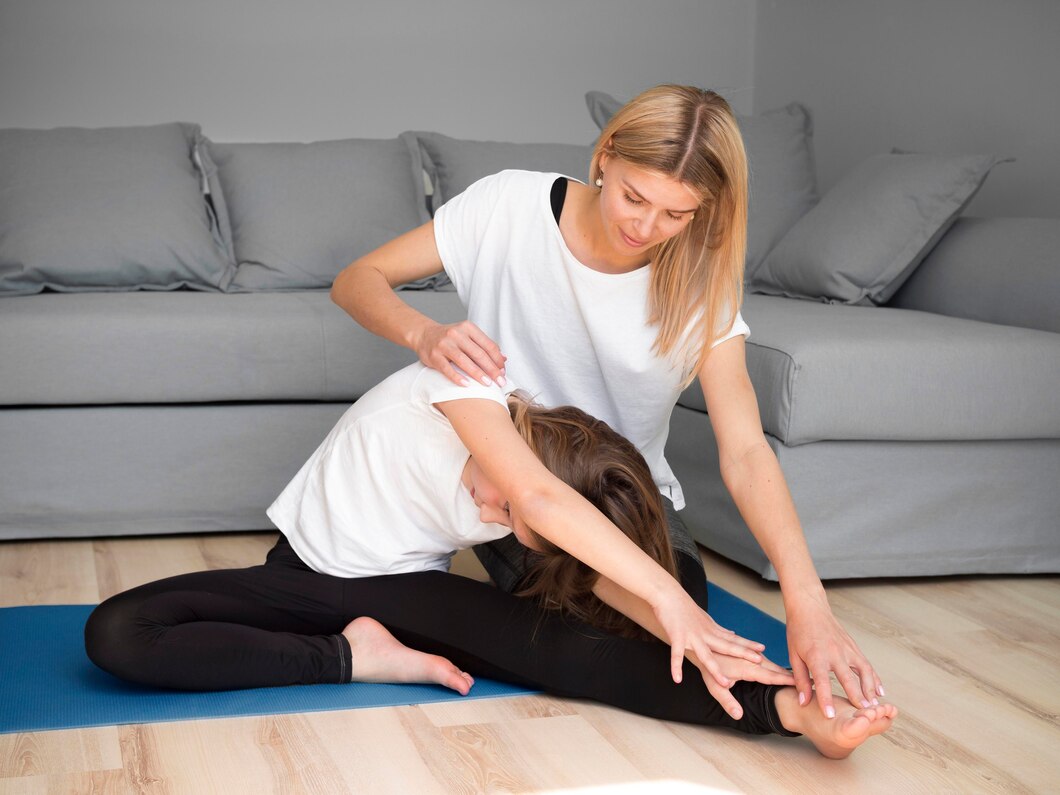
The Feldenkrais Method, principles and benefits for well-being, is impressive in its results: 82% of people who have experienced it report a significant improvement in their health. Developed in the 1950s by Moshe Feldenkrais following a knee injury, this approach establishes a fundamental link between movement, perception, emotions, and thought.
We note that the Feldenkrais method is based on the principle of organic learning, supported by recent discoveries in neuroscience on neuroplasticity. Indeed, the benefits of Feldenkrais are numerous and reach a wide audience. This method is particularly helpful for people suffering from chronic pain and mobility issues, while also improving respiratory capacity. It also benefits children, adults, seniors, people with disabilities, as well as artists and athletes seeking to optimize their performance.
In this article, we explore the fundamental principles of this method, how it works through individual sessions (Functional Integration) and group sessions (Awareness Through Movement), as well as its many benefits for your daily well-being.
The foundations of the Feldenkrais method
At the boundary between science and the art of movement, the Feldenkrais method rests on solid foundations that explain its transformative power.
The origins and journey of Moshe Feldenkrais
Born in Ukraine in 1904, Moshe Feldenkrais forged his destiny through a solitary journey to Palestine at only 14 years old. This determined young man worked as a mason in Tel Aviv while continuing his studies. Passionate about football, he suffered a knee injury that would later decisively shape his career.
In 1928, he settled in France, where he earned an engineering degree at the ESTP, then a doctorate in Physical Sciences at the Sorbonne. His academic path was prestigious - he notably worked in the laboratory of Frédéric and Irène Joliot-Curie (Nobel Prize in Chemistry 1935) and became Paul Langevin's assistant.
During the Second World War, Feldenkrais put his skills at the service of the British Admiralty to develop sonar. It was on the slippery decks of submarines that he aggravated his knee injury. Faced with an uncertain surgical prognosis, he refused the operation and decided to explore solutions himself for moving without pain. This personal quest gave rise to his method, which he fully developed in the 1950s.
Influences: judo, neurobiology, engineering
His encounter with Jigoro Kano, founder of judo, in 1933 in Paris marked a decisive turning point. Feldenkrais became one of the first Europeans to earn a black belt (1936), then the second dan (1938). He founded the Jiu-Jitsu Club of France, the embryo of the future French Judo Federation.
His method results from a unique synthesis of several disciplines:
-
Mechanical principles and scientific analysis from his engineering training
-
Efficiency of movement and economy of effort learned from judo
-
Knowledge of neurology and anatomy that he studied intensively
-
Observation of children's psychomotor development, facilitated by his pediatrician wife
The role of the nervous system and proprioception
At the heart of the benefits of Feldenkrais lies an advanced understanding of the nervous system. Contrary to popular belief, our limitations do not always come from the joints, but often from the way our brain organizes movement.
The method relies on neuroplasticity - the brain's ability to reorganize itself throughout life. Indeed, the central nervous system constantly learns from lived experience, making it possible to modify unsuitable movement patterns.
Proprioception - the perception of our body's position in space - plays a crucial role. Feldenkrais uses it as an entry point to communicate directly with the nervous system. Through gentle and conscious movements, the method stimulates the sensorimotor loop that links sensations, intentions, and responses to the environment.
This pioneering approach intuited by Feldenkrais is today confirmed by modern neuroscience research, particularly on brain plasticity, which makes it possible to improve our body schema and our comfort in life.
How does the Feldenkrais method work?
At the heart of the Feldenkrais method lies a unique learning approach that communicates directly with our nervous system. Unlike conventional methods, it does not aim to correct postures, but to expand our repertoire of possible movements.
Movement as a learning tool
Movement is the fundamental tool of this method. Moshe Feldenkrais understood that our relationship to the world is built through our movements. "Through movement, we create our external and internal reference points," he stated. Indeed, no sensation exists without a motor component, every sensory experience involving a change in the distribution of muscle tone.
This approach is based on a simple principle: rather than adding information, it renews the primitive structures of our functioning. Thus, every moment becomes an opportunity to "create" our reality through conscious sensorimotor experiences.
The importance of body awareness
The method invites practitioners to explore their movement habits by paying attention to subtle sensations, proprioception, and orientation in space. "If you know what you are doing, you can do what you want," this Feldenkrais motto perfectly sums up his philosophy.
Consequently, becoming aware of our psychosomatic reality allows us to know ourselves better and understand our interactions with the environment. Sessions take place slowly and effortlessly, connecting mind to movement for optimal relaxation and effective awareness.
Organic learning and neuroplasticity
Organic learning, a concept developed by Feldenkrais in the 1950s, anticipated modern discoveries about neuroplasticity. This brain's ability to reorganize itself throughout life makes it possible to modify patterns that have become rigid and unsuitable.
Our limitations do not necessarily stem from mechanical constraints, but often from the way our nervous system organizes movement. Through gentle explorations, the method stimulates neuroplasticity, allowing our nervous system to integrate new motor options better suited to our current needs.
This somatic learning process changes not only our movements, but also our emotions, thoughts, and behaviors, opening the way to a global transformation of our being.
What are the benefits of the Feldenkrais method?
The results speak for themselves: 82% of people who have practiced the Feldenkrais method report a significant improvement in their health. This gentle approach offers a multitude of benefits, affecting both body and mind.
Relief from chronic pain and musculoskeletal disorders
The Feldenkrais method has proven particularly effective in relieving chronic pain. By developing better body awareness and changing unsuitable movement patterns, practitioners considerably reduce their pain. Clinical studies show that this method provides greater benefits than classical therapy for improving the quality of life of patients suffering from musculoskeletal disorders.
In Germany, the method is recognized for its effectiveness in pain management, whether caused by musculoskeletal disorders, injuries, or even undetermined causes. It is particularly helpful in limiting injuries caused by repetitive movements such as bursitis, tendinitis, or carpal tunnel syndrome.
Improved posture and mobility
By becoming aware of postural habits, practitioners gradually adopt a more balanced posture. The skeleton becomes more mobile, allowing the body to readjust naturally in all situations.
By regaining more mobility between each vertebra and in the rib cage, practitioners benefit from a more supple back and feel greater ease of movement in daily life. This improvement translates into greater flexibility and range of motion.
Reduced stress and better emotional management
Feldenkrais practice promotes deep relaxation and develops self-awareness, thereby helping to reduce stress and anxiety. A randomized clinical study conducted among people with multiple sclerosis demonstrated a significant improvement in depression and anxiety rates after eight weeks of practice.
This method acts directly on the nervous system, notably by activating the parasympathetic system, which plays a calming role. Improved breathing also allows better oxygenation, contributing to a reduction in tension.
Development of self-perception
By consciously exploring a variety of movements and bodily sensations, the method greatly improves sensory perception and body awareness. People suffering from eating disorders have thus shown better acceptance of parts of their bodies perceived as "problematic."
Benefits for children, seniors, artists, and athletes
For children, especially those with developmental disorders, the method helps improve coordination, balance, and self-confidence. It also supports the development of language and learning abilities.
For seniors, it stimulates physical and cognitive abilities, improves balance, and prevents falls. For artists and athletes, it optimizes precision of movement, develops coordination, and prevents injuries. For example, in golf, it improves the swing and helps gain precision.
How does a Feldenkrais session take place?
The Feldenkrais method is structured around two complementary approaches that allow movement to be explored consciously. Each session offers a unique learning space where the body becomes the main instrument of transformation.
Individual sessions: Functional Integration
Functional Integration (FI) is the personalized approach of the method. During these sessions, I remain clothed and lie on a suitable table, sometimes sitting or standing depending on the needs. The practitioner then establishes a non-verbal dialogue through their hands, using gentle and non-invasive touch. They guide me through precise movements, often of small amplitude, to help me perceive my habitual patterns.
These delicate mobilizations make it possible to access movement possibilities that are often "pleasantly surprising because never explored." The practitioner may use various supports (rollers, cushions, foam blocks) to facilitate my learning or provide greater comfort.
Group sessions: Awareness Through Movement
Awareness Through Movement (ATM) sessions take place in groups. Usually lying on the floor, sometimes sitting or standing, I am verbally guided by the practitioner through a structured sequence of movements. The originality lies in the absence of demonstration: "the student is invited not to imitate the teacher, but rather to seek within themselves."
Each lesson explores a specific function (turning, breathing, finding balance) through slow, effortless movements repeated several times. Attention remains constantly directed toward internal sensations rather than an external goal.
Duration, frequency, and personalization of sessions
Individual sessions last between 45 minutes and one hour, while group lessons range from 20 to 60 minutes. To fully feel the benefits, regular practice is recommended - "a weekly one-hour class over a period of at least 12 months."
Each session is adapted to the person's specific needs. Indeed, some issues require individual follow-up, especially after an accident or surgery, when "the body schema is destroyed."
The practitioner's role in support
The Feldenkrais practitioner plays a fundamental role: they create a safe learning context. Through verbal or manual guidance, they help me "re-establish a better connection between the central nervous system and sensations."
Their rigorous training (800 hours spread over three or four years) allows them to observe my movements with finesse and detect resistances that "often reflect psychological and physical limitations." However, they never impose corrections: "it is always the patient who finds, the therapist simply opens up possibilities."
Conclusion
At the end of this in-depth exploration, we find that the Feldenkrais method is indeed a remarkable holistic approach to well-being. Without a doubt, its principles based on neuroplasticity and organic learning offer a powerful alternative to conventional therapeutic methods.
This method stands out mainly for its gentleness and effectiveness. The results speak for themselves: 82% of practitioners report a significant improvement in their health. Whether to relieve chronic pain, improve posture, reduce stress, or develop body awareness, the benefits affect all aspects of our being.
The beauty of the Feldenkrais approach also lies in its accessibility. Everyone can adapt it to their specific needs, whether it is a child in development, a senior wishing to preserve mobility, an artist seeking to perfect their art, or a person suffering from physical limitations.
Through Functional Integration or Awareness Through Movement sessions, we learn to know ourselves better and to develop our movement potential. As a result, this better understanding of our body transforms our relationship with the world around us.
For those who wish to experience this method, many qualified practitioners are now available. Specialized platforms such as Hello Soins also make access to Feldenkrais sessions and other alternative medicine approaches easier, thus offering a premium service for both patients and practitioners.
Ultimately, the Feldenkrais method reminds us of this essential truth: our body possesses innate intelligence and a continuous capacity for learning. By giving it the attention it deserves and listening to it with kindness, we open the door to deep and lasting well-being.