
Guided Mindfulness Relaxation
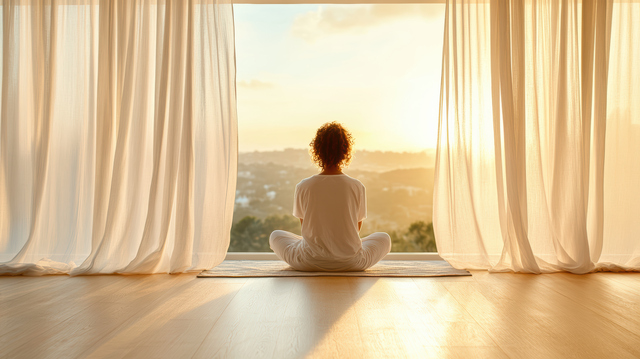
Guided Mindfulness Relaxation transforms the health and well-being of 81% of practitioners who report a significant improvement in their overall health. In a world where stress is becoming ubiquitous, this approach stands out as a natural and effective solution for 82% of people seeking to reduce their daily level of anxiety.
But what are the real benefits of meditation, and what exactly is mindfulness meditation? This age-old practice, now supported by modern science, offers far more than simple relaxation. In fact, it improves concentration, strengthens attention, and allows for better emotional management. Moreover, since the COVID-19 pandemic, we have observed a significant increase in Canadians turning to this method as a coping mechanism in the face of mental health challenges.
At Hello Soins, we are committed to making these wellness practices accessible to everyone. Our premium platform connects patients with qualified practitioners in alternative medicine, particularly in guided mindfulness relaxation. Thus, we invite you to explore together the principles and benefits of this method, which also helps 79% of users relieve the symptoms of obsessive-compulsive disorder (OCD).
What is guided mindfulness relaxation?
The practice of guided mindfulness relaxation represents a contemporary approach to mental well-being that is rapidly gaining popularity. Contrary to some common misconceptions, this method does not simply consist of "thinking about nothing," but rather of developing a mindful awareness of the present moment.
Origins of mindfulness
Mindfulness, or pleine conscience in French, draws its roots from Buddhist traditions more than 2,500 years old. However, its modern form, stripped of any religious connotation, was developed in the 1970s by Jon Kabat-Zinn, a professor of medicine at the University of Massachusetts. He created the MBSR (Mindfulness-Based Stress Reduction) program to help patients suffering from chronic pain.
This Westernized approach preserves the essence of ancestral practices while adapting them to contemporary needs. Today, mindfulness is recognized and used in many fields: medical, educational, professional, and personal.
Difference between meditation and mindfulness
Although often confused, meditation and mindfulness have important nuances:
-
Meditation is a formal practice in which one deliberately sits for a set period, whereas mindfulness can be practiced at any time in daily life
-
Meditation encompasses many techniques (transcendental, Zen, etc.), of which mindfulness is only one variant
-
Meditation sometimes aims for altered states of consciousness, while mindfulness seeks to ground us in present reality
Guided mindfulness relaxation combines these two approaches: it uses a structured meditative framework while cultivating the present-moment awareness characteristic of mindfulness.
Why is guided relaxation effective?
The effectiveness of this method relies on several neuropsychological mechanisms. First, vocal guidance provides an anchor point that helps maintain attention, particularly beneficial for beginners. Moreover, the precise instructions facilitate the progressive learning of techniques.
Indeed, guided mindfulness relaxation activates the parasympathetic system, responsible for rest and recovery, while reducing the activity of the sympathetic system linked to stress. This physiological rebalancing explains why so many people feel deeply relaxed after a session.
At Hello Soins, we have found that patients particularly appreciate the accessibility of this practice. Our premium platform makes it easy to connect with qualified practitioners who tailor their sessions to each person's specific needs. Thus, even people who have never practiced before can easily discover the benefits of guided mindfulness relaxation, contributing to their overall well-being.
The benefits of meditation for well-being
Scientific results show that meditation offers a multitude of benefits for our overall well-being. Unlike traditional medication-based approaches, this practice acts on several aspects of our health simultaneously, without unwanted side effects.
Reduction of stress and anxiety
Meditation effectively regulates the stress response by reducing cortisol secretion in the body. A recent study revealed that after six months of training, the amount of cortisol in participants' hair had decreased by 25%. Even more remarkable, mindfulness meditation proved to be as effective as an antidepressant for treating anxiety disorders. It works by balancing the autonomic nervous system, reducing the activity of the sympathetic system (responsible for the "fight or flight" response) while promoting the parasympathetic system (which manages relaxation).
Improved sleep
For those struggling with insomnia, meditation offers a natural and lasting solution. Although participants in studies report that they do not necessarily sleep longer, they do acknowledge sleeping better, waking up more refreshed, and feeling less distressed by insomnia. Regular mindfulness practice improves overall sleep quality by reducing the time needed to fall asleep and increasing the duration of deep sleep.
Strengthening attention and memory
Meditation promotes neuroplasticity – that remarkable ability of the brain to create new neural connections essential for learning. Scientific studies suggest that mindfulness improves attention and resistance to distractions. By learning to focus the mind on a specific task, it becomes easier to concentrate effectively on one's work and memorize new information.
Better emotional management
Mindfulness teaches us not to flee from or suppress our emotions, but rather to observe and accept them without judgment. This practice creates a "safe" space to welcome our difficult feelings, accept them, and then gradually transform them. Thus, we develop greater emotional resilience without losing our sensitivity – which makes us deeply human.
Support for mental health
Positive effects have been demonstrated in the treatment of many disorders such as anxiety, post-traumatic stress disorder, substance abuse, and personality disorders. At Hello Soins, we connect patients with qualified guided mindfulness relaxation practitioners to support these issues. Our premium platform makes this personalized follow-up easier, which is essential for sustainably integrating these beneficial practices into everyone's daily life.
How does a guided relaxation session work?
A guided mindfulness relaxation session is built around a precise framework that optimizes its therapeutic benefits. Far from being improvised, this practice follows a carefully designed structure that facilitates meditative immersion.
Preparing the environment
Creating a suitable setting is the first essential step. A peaceful, disturbance-free environment significantly enhances the experience. The following elements help create this sanctuary of relaxation:
-
Dim lighting or a few lit candles
-
A comfortable temperature
-
Comfortable, non-restrictive clothing
-
A space where you feel safe, disconnected from the outside world
Posture also plays an essential role: sitting upright with the back straight or lying down, hands resting on the legs uncrossed – the important thing is to adopt a position you can maintain comfortably throughout the session.
Breathing and visualization techniques
The session generally unfolds in three distinct phases:
-
Muscle relaxation: after a progressive relaxation of the body, from the face down to the feet, you reach a state of mental relaxation between wakefulness and sleep.
-
Positive visualization: in this receptive state, guided by the practitioner’s voice, you visualize soothing images that reactivate your inner resources.
-
Anchoring: you absorb the beneficial sensations to extend them into your daily life.
Conscious breathing serves as a guiding thread throughout the session. It helps calm the nervous system and deepen the state of relaxation.
The practitioner’s role in support
The practitioner creates a caring space for discussion before and after the session, where you can express how you feel. Through their presence and observation, they guide you through the different techniques and adapt their approach to your specific needs.
At Hello Soins, our premium platform makes it easy to connect with qualified practitioners who personalize each session according to your goals: stress management, sleep improvement, or personal development.
Recommended duration and frequency
Sessions generally vary between 10 and 45 minutes depending on needs. For optimal practice, one weekly session is more than sufficient. Indeed, consistency matters more than intensity.
With experience, you will develop automatic responses that will allow you to reach this state of relaxation in just a few minutes, a valuable resource when facing stressful situations in everyday life.
Integrating mindfulness into daily life
The practice of mindfulness is not limited to formal meditation sessions. Indeed, integrating mindfulness into our daily lives offers an accessible and effective way to reap all its benefits.
Simple exercises to do at home
To begin, the STOP exercise is an excellent gateway to mindfulness:
-
S: Stop what you are doing
-
T: Take Time to breathe deeply
-
O: Observe your sensations, emotions, and thoughts without judgment
-
P: Proceed with your activity with greater clarity
The body scan, or body sweep, is another fundamental practice. Lying comfortably, mentally travel through each part of your body while noticing the sensations present. This technique, drawn from the MBSR program, significantly reduces stress and improves body awareness.
Informal meditation is just as valuable: taking a shower, eating, or even gardening can become moments of mindfulness when you pay special attention to sensations, smells, and textures.
Using mindfulness at work
At the office, brief but regular meditative breaks greatly improve concentration and efficiency. Research shows that people who practice mindfulness develop a better perception of their environment and manage stressful situations more effectively.
Before an important meeting, a few deep breaths help recentre yourself. During commutes, mindful walking offers a valuable moment of disconnection between two tasks.
Creating a sustainable routine
Regularity matters more than duration. Start with just 5 minutes a day rather than long occasional sessions. Structured 8-week programs, such as those offered by Hello Soins practitioners, provide an ideal framework for developing an independent practice.
Our premium platform supports your journey by connecting you with qualified experts who will guide you in establishing a personalized routine. Thanks to regular follow-up and privileged exchanges via our integrated chat, your practice will naturally become part of your daily life, gradually transforming your relationship with stress and anxiety.