
Hypnosis
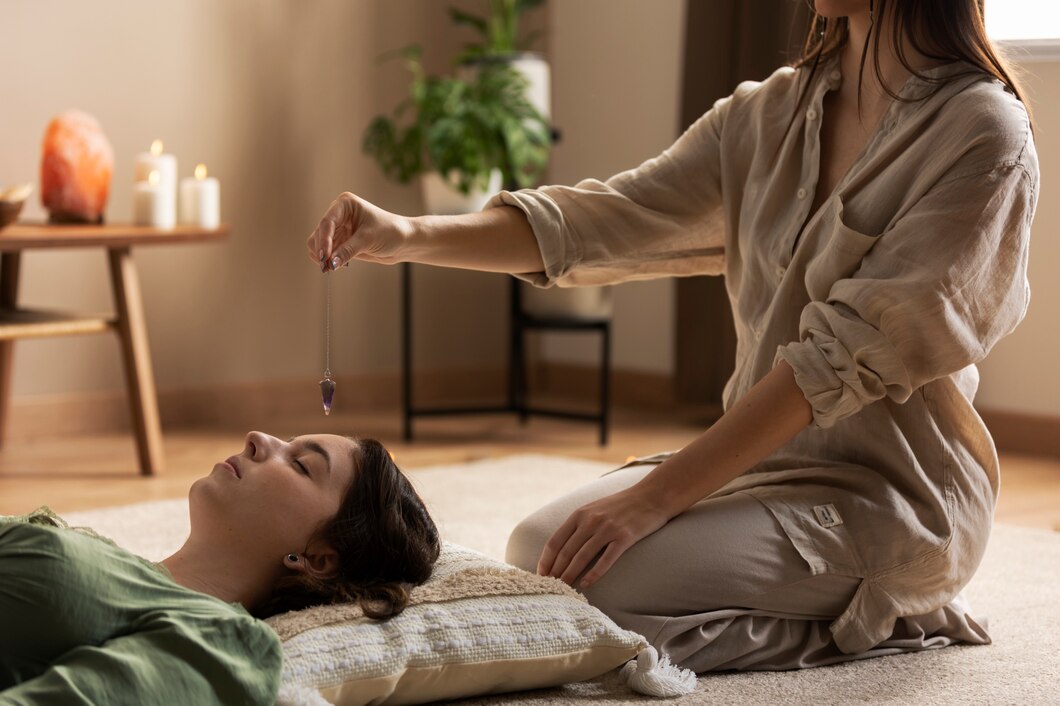
Did you know that the benefits of hypnosis are recognized by about two-thirds of adults who are susceptible to it? Indeed, this therapeutic practice, often surrounded by mystery, has nevertheless been scientifically validated ever since the British Medical Association recognized its medical value in 1955.
At Hello Soins, we find that hypnosis and well-being often go hand in hand. A hypnosis session, generally costing an average of €80, can considerably reduce stress and anxiety. The benefits of hypnosis are particularly remarkable for managing chronic pain, treating irritable bowel syndrome, and even as a sedation method during surgical procedures. Moreover, 78% of people consulting for hypnosis report an improvement in their health.
In this article, we explore the fundamental principles of hypnosis, its various therapeutic applications, as well as its effectiveness proven by numerous scientific studies. Whether you are curious or looking for a solution to improve your well-being, discover how this practice, nearly two centuries old, can help you today.
What is hypnosis?
Hypnosis is often surrounded by mystery and misconceptions. Unlike theatrical or cinematic portrayals, it does not involve falling under the grip of a magical power. Rather, it is a recognized therapeutic practice, now used in many medical and personal development contexts.
A natural altered state of consciousness
Hypnosis corresponds to an altered state of consciousness that we experience naturally in our daily lives. Indeed, each of us spontaneously enters states close to the hypnotic trance several times a day. For example, when you are absorbed in a captivating book, when you drive along a familiar road without remembering the journey, or in the moments before falling asleep.
This particular state is characterized by intense concentration and focused attention, while maintaining deep relaxation. During a hypnosis session, the practitioner guides the person into this natural state where the conscious mind is less active, thus making it easier to access unconscious resources to promote well-being.
Difference between hypnosis and sleep
Although the term "hypnosis" comes from the Greek "hypnos" meaning "sleep," there are fundamental differences between these two states. First of all, the hypnotized person remains conscious and retains the ability to exercise judgment. They can stop the session at any time if they wish.
Moreover, unlike sleep, where brain activity slows considerably, hypnosis is characterized by intense and organized brain activity. Neuroscience studies have shown that certain areas of the brain are particularly active during hypnosis, notably those linked to attention and emotional processing.
It is also important to note that the hypnotized person always remains in control - they will never obey suggestions contrary to their values or personal ethics. That is why the practitioners listed on Hello Soins offer a safe and professional setting for their sessions.
The origin of the word and the first practices
The term "hypnosis" was popularized in the 18th century by the Scottish physician James Braid, but similar practices have existed for millennia. In ancient Egypt, "sleep temples" were already offering healings based on altered states of consciousness.
However, it was Franz Anton Mesmer who, with his theory of "animal magnetism" in the 1770s, laid the first foundations of modern hypnosis. French neurologist Jean-Martin Charcot then contributed to its scientific legitimization at the Salpêtrière in Paris.
Contemporary hypnotherapy owes much to American psychiatrist Milton Erickson who, in the 20th century, developed a more flexible and personalized approach. Today, the benefits of hypnosis are recognized in many therapeutic fields, as we will see in the following sections.
The main principles of hypnosis
At the heart of hypnotic practice are fundamental principles that explain its therapeutic effectiveness. This method, far from being mystical, relies on precise psychological mechanisms that make it possible to access our inner resources.
The role of the unconscious
The unconscious accounts for about 90% of our mental activity and plays a predominant role in hypnosis. Unlike our conscious, analytical, and critical mind, the unconscious works through associations of ideas, metaphors, and emotions. During a hypnosis session, the goal is to temporarily bypass the "critical guardian" of our consciousness to communicate directly with this unconscious.
This privileged dialogue makes it possible to access our deep resources and modify certain limiting thought patterns. In our practice at Hello Soins, we find that this connection with the unconscious is often the key to therapeutic change.
Hypnotic induction techniques
Induction is the first phase of a session, making it possible to access the altered state of consciousness. Common techniques include:
-
Visual fixation (focusing on a specific point)
-
Progressive relaxation (sequential muscle relaxation)
-
Confusion (sensory overload that facilitates entry into trance)
-
Conversational inductions (more subtle, used notably in Ericksonian hypnosis)
Each practitioner listed on Hello Soins adapts these techniques according to each person’s receptiveness and specific needs.
Suggestibility and receptiveness
Suggestibility is not a sign of weakness but a natural capacity that varies from one individual to another. It represents our ability to transform an idea into a real experience. Moreover, about 15% of people are highly suggestible, while 70% have moderate suggestibility.
Receptiveness depends on several factors: trust in the practitioner, personal expectations, and the emotional state at the time. That is why we rigorously select our hypnotherapists to ensure a safe environment.
Hypnosis and well-being: how does it work?
The benefits of hypnosis on well-being are explained by several mechanisms. First of all, it induces deep relaxation that reduces the production of cortisol, the stress hormone. Furthermore, it changes the activity of certain brain areas, notably the anterior cingulate cortex, which is involved in pain perception.
Regular hypnosis practice also strengthens neuroplasticity - the brain’s ability to create new neural connections. Thus, the positive suggestions received during sessions can gradually replace old limiting patterns, making a lasting contribution to psychological and physical well-being.
The benefits of hypnosis for well-being
Scientific research shows that hypnosis offers impressive results for improving quality of life. At Hello Soins, we see every day how this practice positively transforms our patients’ well-being. Let us look at these concrete benefits together.
Reducing stress and anxiety
Hypnosis acts directly on our autonomic nervous system. By modifying brainwave activity, it promotes the production of regulating hormones such as serotonin. Furthermore, hypnotic techniques make it possible to establish positive anchors that the patient can mobilize in the face of anxiety-provoking situations. On our platform, many patients report a significant decrease in their anxiety symptoms after only a few sessions.
Improving sleep
Sleep disorders affect about 30% of the French population. Hypnotic suggestions help restructure nighttime habits and calm the mental hyperactivity responsible for insomnia. Thus, hypnosis promotes falling asleep more quickly and deeper sleep, naturally strengthening the circadian cycle.
Managing chronic pain
The effectiveness of hypnosis against pain is particularly notable. By changing sensory perception, it makes it possible to significantly reduce the intensity of chronic pain, whether of inflammatory, neuropathic, or functional origin. In particular, migraines, lower back pain, and fibromyalgia respond favorably to this approach.
Support for addictions
When faced with dependence, hypnosis offers a complementary alternative to conventional therapies. It strengthens motivation to change and reduces compulsions by working on the unconscious triggers of addictive behavior. The practitioners listed on Hello Soins effectively support people wishing to break free from tobacco, alcohol, or other addictions.
Strengthening self-confidence
By accessing unconscious resources, hypnosis makes it easier to identify and modify limiting beliefs. However, its action goes beyond the mind by bodily integrating new resources. Patients often report improved confidence and a greater sense of personal effectiveness.
Support during life transitions
During periods of change (bereavement, separation, career change), hypnosis facilitates adaptation by activating our natural capacities for resilience. In addition, it makes it possible to welcome difficult emotions while preserving psychological balance, offering a safe space to get through these crucial stages.
Self-hypnosis and the course of a session
Learning self-hypnosis techniques is an essential step in extending the benefits of sessions with a professional. At Hello Soins, we encourage this autonomy, while offering personalized support from our certified practitioners.
What is self-hypnosis?
Self-hypnosis is the ability to induce a hypnotic state in oneself, without the intervention of a practitioner. This autonomous practice makes it possible to access one’s own unconscious resources to gradually strengthen therapeutic benefits. By mastering these techniques, you become an active participant in your daily well-being. Thus, self-hypnosis works as a true tool for empowerment that effectively complements sessions with a professional.
When should you practice self-hypnosis?
Regular practice of self-hypnosis optimizes its beneficial effects. Here are the best times to integrate it into your daily routine:
-
In the morning upon waking, when the mind remains naturally receptive
-
Before a stressful situation (interview, public speaking)
-
In the evening, to promote peaceful falling asleep
-
During a peak of anxiety or pain, as an immediate calming technique
However, during the initial learning phase, choose a calm environment and a time when you will not be disturbed.
How does a hypnosis session take place?
A professional session generally lasts between 45 and 90 minutes. After a preliminary interview to define the goal, the practitioner guides you into the hypnotic state through various induction techniques. During the trance, you remain conscious and keep your free will while being particularly receptive to positive suggestions. The session ends with a gradual return to the ordinary state of consciousness, followed by a discussion of your experience.
The practitioner’s role in support
The hypnosis practitioner acts as a caring guide, not as a magician who puts you into a deep sleep. At Hello Soins, our certified practitioners create a safe space where you can explore your inner resources. Furthermore, they personalize each session according to your specific needs and teach you adapted self-hypnosis techniques. Our platform also facilitates follow-up between sessions through an integrated chat, thereby strengthening the therapeutic relationship.