
Mental preparation for sporting events
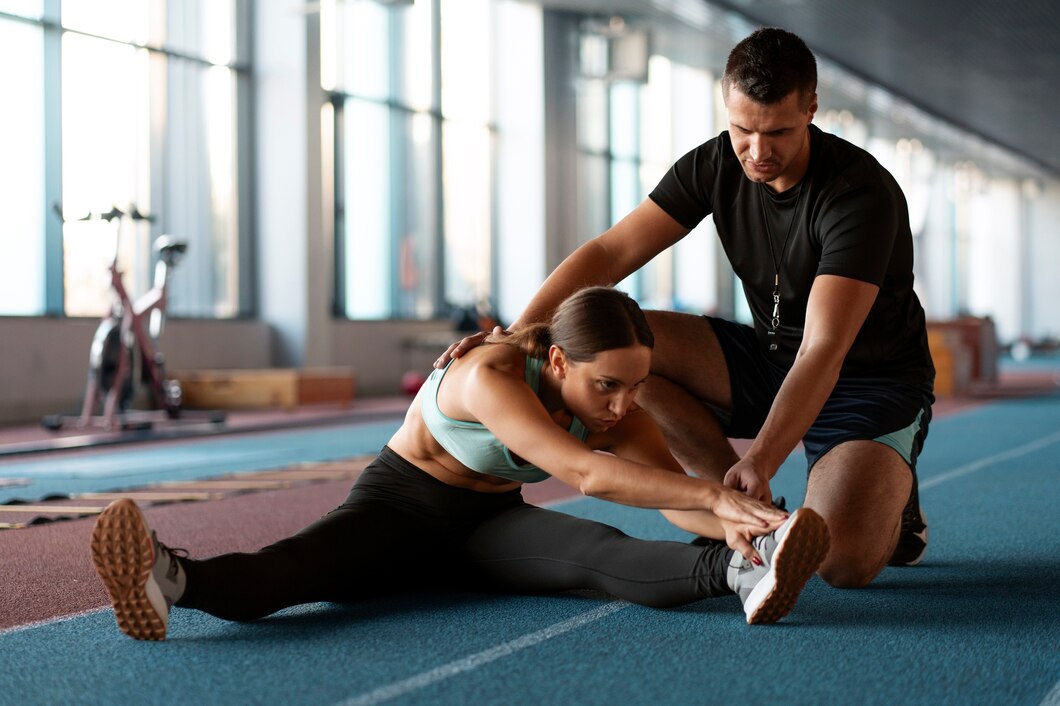
Mental preparation for sporting events is a decisive element that many athletes still neglect. Indeed, while Christoph Strasser covered the impressive distance of 2,200 km in just 3 days, 12 hours, and 41 minutes during the Race Around Austria in 2016, his performance demonstrates the crucial importance of the mental aspect in athletic feats.
We see that athletes generally invest a great deal of money, time, and energy in their physical preparation. Yet mental preparation in sport proves to be just as decisive in achieving excellence. Moreover, it can even reduce the risk of injury by improving concentration during training. That is why working with a sports mental coach becomes essential for developing skills such as confidence and anxiety management.
In this article, we will explore the fundamental principles and benefits of mental preparation, illustrated by concrete examples such as that of Steffen Deibler, an Olympic swimmer who placed 4th at the London Games in 2012. We will also share practical advice for integrating these techniques into your routine, whether you are a professional athlete or an amateur concerned about your well-being.
The basics of mental preparation in sport
In today’s sporting world, mental preparation stands as a fundamental pillar of performance. Once little known, it is now considered an essential component on the same level as physical and technical training.
Definition and evolution of the concept
According to J. Fournier, mental preparation is defined as “preparation for competition through the learning of mental and cognitive skills, whose main goal is to optimize the athlete’s personal performance while promoting enjoyment of the activity and fostering autonomy.” It encompasses skills such as self-confidence and concentration, procedures such as relaxation and mental imagery, as well as group cohesion strategies.
Historically, this discipline emerged in American university sport during the 1980s. In France, mental preparation long remained taboo, with athletes hesitant to speak about the techniques that enabled them to achieve excellence. Today, thanks to advances in neuroscience and the demystification of mental work, it has become far more widespread and structured, notably under the impetus of INSEP.
Difference between mental preparation and sports coaching
In France, there is some confusion between several similar but distinct concepts. Mental preparation consists of “regular training in which the athlete, as a true actor in the process, becomes familiar with techniques and tools in order to apply them in competition.” Its aim is directly to optimize performance.
By contrast, sports coaching takes a more general approach and focuses on the overall development of the person. Moreover, unlike the sports psychologist, who holds a protected title, the mental coach focuses on mental skills without necessarily addressing possible psychological disorders.
Why it is essential from an early age
Mental preparation is not reserved for professional athletes. In fact, it is particularly beneficial for young athletes from the age of 8. It helps them better understand their emotions, develop concentration, and learn to manage stress.
In addition, it is a real asset for building self-esteem in a positive and structured environment. As the German Academy of mental coaches points out: “Mental preparation should be an integral part of athletes’ training programs from an early age.”
These mental skills, developed early, become valuable resources that will serve far beyond the sporting context, particularly in studies and later in professional life.
Concrete benefits for performance and well-being
Athletes who incorporate mental preparation into their training routine quickly notice significant improvements in both performance and overall well-being. These benefits are far from anecdotal; they are based on physiological and psychological mechanisms that are now well documented.
Improved concentration and motivation
The ability to remain fully focused is a decisive advantage in any sport. Indeed, mental preparation teaches athletes to block out distractions and keep their attention exactly where it is needed. This increased focus directly improves technique, precision, and consistency of movement.
Moreover, mindfulness exercises help focus attention on the present moment, allowing athletes to avoid internal distractions (thoughts, emotions) or external ones (crowd noise, opponent actions). In addition, studies confirm that regular physical activity combined with mental preparation techniques significantly improves cognitive functions, especially attention management.
Reducing stress and anxiety
Mental preparation contributes effectively to managing stress and competition anxiety. Athletes learn to turn negative aspects into positive ones, thereby developing strategies to control their emotions. This allows them to stay calm, even in the most tense moments.
Furthermore, according to the World Health Organization, physical activity combined with mental preparation “would help interrupt negative thoughts associated with stress, depression, and anxiety.” Techniques such as controlled breathing and positive visualization provide concrete tools for managing stress and anxiety.
Preventing injuries through mindfulness
Mindfulness is now being integrated into athletes’ training with convincing results. By developing better body awareness, athletes can identify signs of fatigue or pain before they become problematic.
Specific programs such as MAC (Mindfulness-Acceptance-Commitment) or MSPE (Mindfulness Sport Performance Enhancement) have demonstrated their effectiveness in improving concentration regulation and performance under pressure.
Strengthening self-confidence
Mental preparation helps significantly to develop solid confidence in one’s abilities, a fundamental element for any athlete. Positive visualization exercises and affirmations strengthen self-esteem, which translates into better performance.
Positive affirmation techniques—short, motivating phrases repeated regularly—make it possible to:
-
Fight negative thoughts
-
Positively change one’s mindset
-
Encourage a positive attitude toward challenges
Thanks to these practices, athletes develop greater resilience, enabling them to accept setbacks, learn from their mistakes, and bounce back stronger after each event.
Inspiring examples of athletes and effective practices
To illustrate the principles of mental preparation concretely, let us look at the journeys of two exceptional athletes who made mental work a pillar of their success, as well as the techniques they used.
The case of Christoph Strasser in ultra-cycling
Christoph Strasser, an iconic figure in ultra-cycling, stood out notably during the Race Around Austria. During this extreme event, he faces not only enormous physical challenges but also considerable mental obstacles. His mental preparation rests on three essential pillars: pain management, breaking the event into segments, and intrinsic motivation.
Indeed, Strasser developed a “mental breakdown” technique that allows him not to be overwhelmed by the sheer distance. Instead of thinking about the 2,200 km to be covered, he divides his route into shorter segments and focuses only on the current stage. Moreover, he uses powerful emotional anchors, recalling moments of victory to overcome phases of discouragement.
Steffen Deibler’s mental routine in swimming
Steffen Deibler, a top-level Olympic swimmer, incorporates mental preparation into his training every day. His pre-competition routine, rigorously structured, begins 72 hours before the event.
Notably, Deibler practices a 15-minute visualization session every morning, during which he sees himself executing his perfect race, from the dive to the finish. In addition, he uses controlled breathing techniques to regulate his activation level before the start. This systematic approach has enabled him to achieve remarkable emotional stability in the face of the pressure of international competition.
Techniques used: visualization, anchoring, self-hypnosis
These champions use three main techniques that can be adapted to all levels of practice:
Positive visualization consists of mentally creating detailed images of the ideal performance. It activates the same neural networks as the actual execution of the movement, thereby strengthening the nerve circuits involved in performance.
Anchoring makes it possible to associate a positive emotional state with a simple gesture (such as pressing your thumb against your index finger). Thus, by repeating this gesture before an event, the athlete instantly regains that optimal state.
Self-hypnosis, finally, facilitates access to a state of deep concentration in which positive suggestions are more effectively imprinted on the subconscious, making it possible to overcome mental blocks.
These techniques, accessible to all, can be perfected with the support of a certified sports mental coach.
Practical advice for integrating mental preparation
After understanding the foundations and benefits of mental preparation, let us now turn to concrete methods for integrating it effectively into your sports routine. These techniques, accessible to all, can significantly transform your approach to sporting events.
Setting clear and measurable goals
To succeed, your goals must be precise and realistic. The SMART method (Specific, Measurable, Achievable, Realistic, Time-bound) offers an effective framework for structuring your ambitions. For example, instead of vaguely aiming to “improve your endurance,” set the goal of “running 5 km in under 25 minutes within three months.”
In addition, distinguish three types of goals: outcome goals (winning a competition), performance goals (improving your time), and process goals (refining your technique). The latter are particularly important because they depend entirely on you, unlike results, which may be influenced by external factors.
Using positive affirmations
Positive affirmations are short, motivating phrases that you repeat regularly to reprogram your mind. To be effective, they should be formulated:
-
In the present tense (“I am strong and determined”)
-
Without negation (“I stay calm” rather than “I don’t stress”)
-
In a realistic and personal way
The ideal time to practice them is in the morning upon waking or in the evening before sleeping, when your mind is more receptive.
STOP exercise to block negative thoughts
This simple but powerful technique consists of interrupting the flow of negative thoughts that may arise during exertion. As soon as an intrusive thought appears:
-
Say “STOP” mentally or out loud
-
Take a deep breath
-
Replace the negative thought with a positive affirmation
-
Refocus on the present action by saying “continue”
To maximize its effectiveness, this exercise should be practiced regularly in training before being used in competition.
Reconnecting with past successes
Keeping a record of your successes, even small ones, is a powerful motivational tool. During times of doubt, revisit these moments of success to:
-
Strengthen your confidence
-
Analyze the factors that contributed to your success
-
Reactivate the associated positive feelings
This practice also develops gratitude, an essential component of mental resilience.
Working with a certified sports mental coach
Personalized professional support can significantly accelerate your progress. The mental coach helps you identify your specific blockages and develop strategies adapted to your personality and your goals. For optimal results, favor regular follow-up and consistent application of the techniques between sessions.
Conclusion
Mental preparation is undoubtedly a fundamental element of sports performance that deserves our full attention. As we have seen through the examples of Christoph Strasser and Steffen Deibler, mental abilities often make the difference between a good performance and excellence.
Indeed, the benefits of structured mental preparation go far beyond performance alone. This approach also develops the athlete’s overall well-being, significantly reduces stress and anxiety, while preventing injuries through better body awareness. These skills, once acquired, prove valuable in all aspects of life.
The techniques presented—positive visualization, emotional anchoring, SMART goal setting, or the STOP exercise—can be put into practice today, regardless of your level. Nevertheless, the path to mental excellence requires patience and perseverance. Every athlete progresses at their own pace and according to their specific needs.
Ultimately, mental preparation represents an investment whose dividends are seen both in sport and in personal life. The tools and techniques mentioned in this article offer you a solid starting point. However, do not hesitate to seek support from a certified mental coach for more in-depth and personalized work.
Thus, whether you are a professional athlete aiming for international podiums or an amateur looking to improve your well-being, mental preparation will certainly open up new perspectives for you. Start now to integrate these practices into your daily routine and observe the positive changes that take place, both in your performance and in your personal fulfillment.