
Music therapy
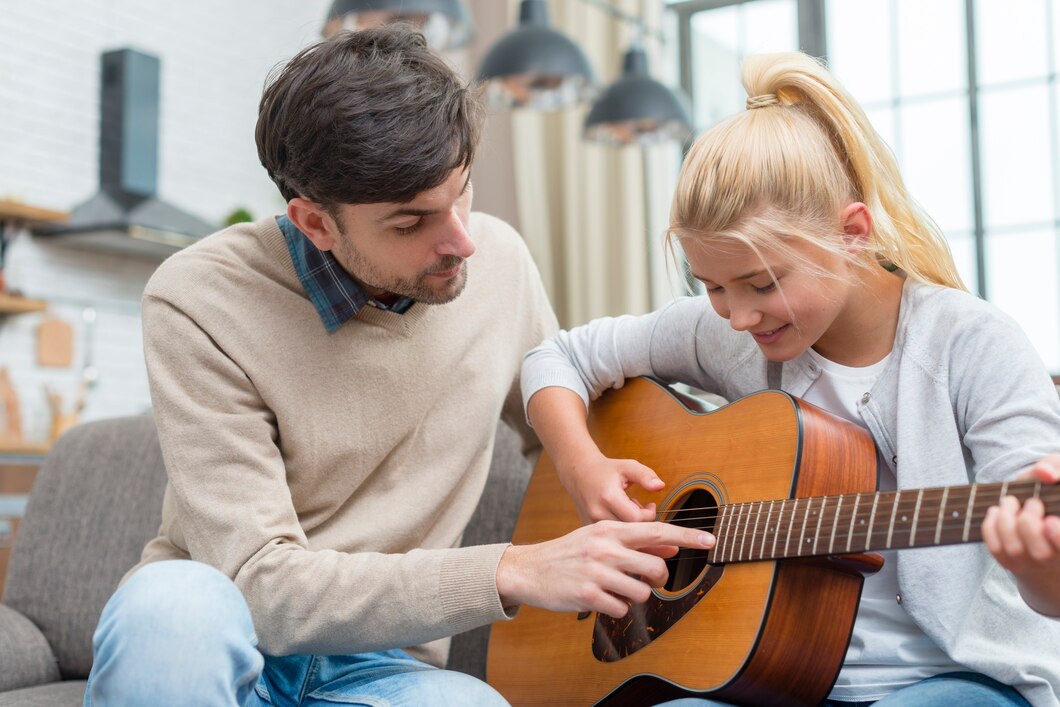
Music therapy impresses with its remarkable results: 86% of patients who have undergone this therapeutic approach report an improvement in their health. At Hello Soins, we are seeing growing interest in this practice, which uses music as a therapeutic tool to improve psychological, emotional, and physiological well-being.
The benefits of music therapy are numerous and scientifically documented. Indeed, this approach can not only reduce anxiety and stress, but also improve mood and promote relaxation. On a physiological level, it also contributes to pain relief and improved sleep. A music therapy session can extend over several months, tailored to each patient according to their specific needs.
This age-old practice, mentioned since Antiquity in the Bible and the writings of Plato, experienced significant development after the Second World War, notably to treat soldiers' trauma. Today, it comes in two main forms: active, where the patient creates the music themselves, and receptive, based on listening. In this article, we explore together the fundamental principles and the many benefits of music therapy for your overall health.
Understanding music therapy: origins and principles
At the heart of alternative therapies, music therapy stands out for its unique approach that transcends the barriers of verbal communication. Let us dive together into this universe where sounds become vectors of healing and balance.
Definition of music therapy
Music therapy is a care, assistance, and support practice that uses music and its sound components as a therapeutic tool. According to the French Music Therapy Federation, it "consists of caring for people experiencing communication and/or relationship difficulties." This approach falls within the field of art therapy, but with a specificity centered on sound media.
This holistic discipline makes it possible to "restore, maintain, or improve an individual's mental, physical, or emotional health." Its main goal is to empower the patient to become an active participant in their own life, to regain control of their body and emotions. Important to note: no musical prerequisite is needed to benefit from a music therapy session.
Historical origins and evolution
The history of music therapy is deeply rooted in our past. As far back as Antiquity, the Greeks already had their own "music therapists" who influenced "mood and humors by using various instruments, rhythm, and sounds." They chose their instruments according to the ailment to be treated: "the aulos with its ecstatic and moving playing or the gentle and harmonious lyre."
However, it was in the 1940s and 1950s that this practice truly took shape as a structured discipline. At that time, it was used on convalescing soldiers to "relieve the traumas of war." In France, Jacques Jost, a sound engineer, proposed in 1954 the hypothesis that it is possible to heal with music. He notably worked with Dr. Rolando Omar Benenzon, one of the world pioneers of music therapy and founder of the first Faculty of Music Therapy in Buenos Aires.
A major turning point came in 1974 with the organization of the first world congress of music therapy at the Salpêtrière Hospital, followed in 1985 by the creation of the World Federation of Music Therapy.
The two forms: active and receptive
Music therapy comes in two complementary approaches adapted to the specific needs of each patient:
Active music therapy consists of having the patient produce sounds or play an instrument. This approach "uses musical instruments, singing, voice, bodily sounds, and body percussion as a third object in the relationship." It is particularly suitable for people who have difficulty expressing themselves verbally, such as severely disabled individuals or those with neurodegenerative disorders.
By contrast, receptive music therapy is based on listening to music and analyzing one’s feelings. The music therapist carefully selects pieces that resonate with the patient’s emotional state in order to "provoke a precise emotion, then a dialogue." This method is especially effective for stimulating memory, particularly in older adults or people with amnesia.
At Hello Soins, we appreciate the flexibility of these two approaches, which can be used separately or combined within the same care plan, depending on the needs identified during the initial psychomusical assessment.
The benefits of music therapy for well-being
Scientific research demonstrates the remarkable effectiveness of music therapy on many aspects of well-being. Over the past twenty years, hundreds of studies have confirmed its beneficial effects, both in health and education.
Psychological effects: stress, anxiety, mood
Music therapy acts powerfully on our mental balance. It significantly reduces anxiety and depression in brain-injured patients from the very first session, with steady improvement up to the twentieth session. Moreover, listening to music leads to a decrease in cortisol levels, the stress hormone, while releasing endorphins, serotonin, and dopamine. These well-being hormones have calming, analgesic, and euphoric properties.
For people suffering from chronic stress, regular sessions help strengthen self-esteem, develop other means of communication, and regulate emotions effectively. In addition, this approach promotes improved mood and encourages optimism.
Physiological impacts: pain, sleep
On a physical level, music therapy offers convincing results. Clinical studies have shown that musical sequences chosen according to listening preference relieve painful symptoms by interacting with the patient's physical, mental, and emotional aspects. In people with fibromyalgia, regular music listening reduces pain levels by 20 to 90% and anxiety by 30 to 75%.
As for sleep, research shows that listening to 30 minutes of soft music in the evening significantly improves its quality. This non-invasive and low-cost technique works by regulating heart rate, breathing, and blood pressure.
Clinical applications: autism, dementia, Parkinson's
Music therapy is particularly effective in several specific clinical settings. For children and adults with autism spectrum disorders (ASD), it improves difficulties in communication and social interaction. Its level of evidence, although moderate, remains higher than that of other therapeutic interventions for this population.
For patients with neurodegenerative diseases such as Alzheimer's or Parkinson's, music therapy is a relevant form of care. It stimulates autobiographical memory in people with dementia and significantly improves their ability to communicate with caregivers. In patients with Parkinson's disease, it helps improve walking speed, step cadence, and movement precision.
At Hello Soins, we facilitate the connection between patients and qualified music therapists via our premium platform, for simplified access to this therapy with multiple virtues.
How a music therapy session unfolds
A music therapy session follows a precise protocol, adapted to the individual needs of each patient. Each step is important and contributes to the overall effectiveness of this alternative therapeutic approach.
Welcome and listening phase
First, the music therapist creates a safe and welcoming environment. This initial phase is essential for establishing a relationship of trust. I note that the practitioner takes the time to discuss with the patient their current emotional state, expectations, and musical background. This initial psychomusical assessment makes it possible to identify specific needs and define personalized therapeutic objectives.
Choosing instruments or sound media
Next comes the selection of sound tools. The music therapist suggests different instruments depending on the chosen approach. In active music therapy, percussion instruments (drums, maracas) are often favored because they do not require prior technical skills. For receptive music therapy, the practitioner selects pieces suited to the patient's emotional state. In addition, some therapists also use Tibetan bowls or therapeutic tuning forks for their vibrational properties.
Time for musical practice
This phase is the heart of the session. In active music therapy, the patient is invited to express themselves freely through the instruments, alone or in sound dialogue with the therapist. In the receptive approach, listening to music is followed by a time for verbal or non-verbal expression of feelings. During this stage, the therapist carefully observes the patient's physical and emotional reactions.
Closing and feedback
The session ends with a closing ritual that allows a gradual return to a normal waking state. This moment is crucial for verbalizing the experience and integrating the benefits of the session. The music therapist can thus note the progress made and adjust the therapeutic program for subsequent sessions.
At Hello Soins, we facilitate connections with qualified music therapists and allow patients to prepare for their session via our integrated chat.
Areas of application and target audiences
Music therapy adapts to a multitude of therapeutic contexts and reaches very diverse audiences, confirming its exceptional versatility in the field of alternative care.
Mental and emotional disorders
Music therapy offers particularly encouraging results for people suffering from psychological disorders. Notably, it helps patients with depression manage their emotions and develop effective coping strategies. Regular sessions also allow people with anxiety disorders or post-traumatic stress disorder to reduce their anxiety levels and regain emotional balance. Moreover, in psychiatry, this approach facilitates emotional expression in patients who have difficulty verbalizing their feelings.
Physical and cognitive rehabilitation
In the field of rehabilitation, music therapy proves valuable for recovery after a stroke. Musical rhythm stimulates motor skills and improves movement coordination. In addition, it supports cognitive rehabilitation by stimulating brain functions involved in memory and attention. This approach is also used alongside conventional care for patients undergoing rehabilitation following head trauma.
Children and adolescents
For younger people, music therapy is a preferred therapeutic tool. For children with developmental disorders or learning difficulties, it fosters the acquisition of social skills and improves concentration. As for adolescents in difficulty, it offers a safe space for non-verbal expression. Thus, in specialized educational institutions, music therapy programs are increasingly being integrated to support students with special needs.
Older adults and neurodegenerative diseases
Finally, older adults represent a particularly receptive population. In nursing homes, music therapy sessions stimulate personal memories and promote social interaction. For patients with neurodegenerative diseases such as Alzheimer's, it sometimes constitutes the last accessible channel of communication. However, each intervention must be carefully adapted to the stage of the disease.
At Hello Soins, we facilitate connections between these different groups and qualified music therapists via our premium platform, enabling practitioners to increase their visibility and patients to benefit from personalized follow-up.