
Psychomotor therapy
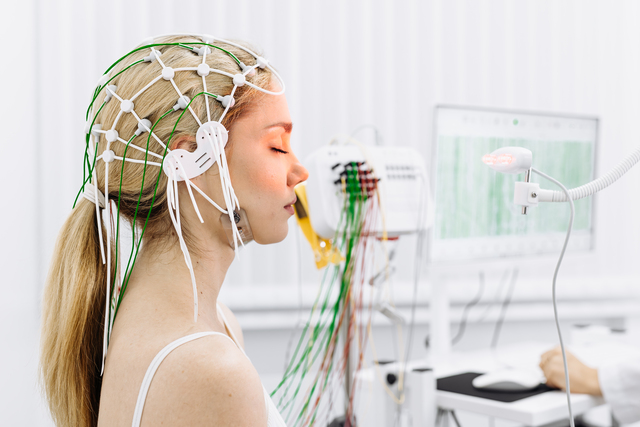
Psychomotricity represents far more than a simple therapy - it is a holistic approach that unites our body and mind to improve our daily well-being. At Hello Soins, we see that this discipline brings considerable benefits to people of all ages, from children to seniors.
Psychomotricity is based on the fundamental principle of the body-mind unity, positively influencing our emotional balance and our motor abilities. This approach helps in particular to improve body awareness, which is essential for a child’s psychomotor development. It can also intervene in various disorders such as psychomotor delay, autism spectrum disorder, dyspraxia, or hyperactivity.
In this article, we explore the fundamental principles of psychomotricity, its applications for different age groups, as well as its concrete benefits on motor skills, stress management, and self-confidence. We will also see how this discipline adapts to individual needs, making it a particularly effective and personalized approach.
The major principles of psychomotricity
At the heart of alternative therapeutic practices, psychomotricity relies on solid scientific foundations that explain its effectiveness. This approach, which we value at Hello Soins, is based on four essential pillars that make it possible to support each individual in their uniqueness.
Body-mind unity: an essential foundation
Psychomotricity is built around a holistic view of the human being, where body and mind function in permanent synergy. Indeed, our emotions directly influence our posture, our breathing, and our muscle tone. Conversely, a body in motion supports our mental and emotional balance. This relational approach allows each person to experience and feel a sensory, motor, emotional, and mental unity. For example, in a state of stress, our body often adopts restricted breathing accompanied by muscular tension. Adapted relaxation exercises can then help us regain a state of deep relaxation.
Psychomotor development in children
Psychomotor development describes how a newborn’s motor skills evolve over time. This progression is inseparable from sensory development, with which it functions in constant interaction. The first three years are particularly crucial, marked by several fundamental laws such as differentiation: the child moves from global, reflexive motor skills to more precise and voluntary movements. At 3-4 months, they grasp on contact, then around 5-6 months, their grasp becomes voluntary. These acquisitions follow a rhythm specific to each child, influenced by their environment and the stimulation of those around them.
The role of muscle tone in balance
Muscle tone, from the Greek "tonos" meaning tension, forms the backdrop of movement and posture. It also reflects our emotional state. This physiological phenomenon allows us to maintain posture and make adjustments when carrying out a movement. Three types of tone coexist: background tone (permanent tension), postural tone (maintaining a posture), and action tone (preparation for movement). Natural variations occur according to our emotional states - anxiety increases it while relaxation reduces it. This tonic regulation is essential for maintaining optimal muscular balance.
Perception of space and time
Space and time constitute both a general framework and a zone of personal expressiveness. Spatial perception develops through bodily experience - "a motionless body could never have conceived space." As for temporal perception, it allows us to organize ourselves, to conceive causality, and to project ourselves into the future. These two dimensions are acquired progressively and can be altered in certain pathologies such as Alzheimer’s disease. In psychomotricity, we work on these perceptions through various forms of mediation such as music and rhythm, which are particularly effective in structuring temporality.
Who is psychomotricity for?
The strength of psychomotricity lies in its ability to adapt to the specific needs of each person, regardless of age. On our Hello Soins platform, we see every day how this alternative therapeutic approach effectively supports different groups throughout their life journeys.
Children: developmental disorders and learning
In children, psychomotricity is particularly used for psychomotor developmental disorders. It offers a reassuring framework for young people with learning difficulties, attention disorders, or coordination problems. Through play and bodily experimentation, sessions promote the acquisition of fundamental skills such as balance, laterality, and fine motor skills. These skills are essential for writing and spatial organization on the page. In addition, for children with autism spectrum disorders or developmental delays, psychomotricity provides valuable support in sensory integration and non-verbal communication.
Teenagers: self-confidence and emotional management
In adolescence, a period of profound bodily and identity changes, psychomotricity helps young people come to terms with this changing body. It supports them in their search for identity by strengthening their body schema and self-image. Furthermore, sessions provide a space for expression and emotional regulation, particularly beneficial for anxious adolescents or those experiencing relationship difficulties. The relaxation and breathing techniques taught become valuable tools for managing stress related to exams or social pressure.
Adults: stress, burnout, and well-being
For adults, psychomotricity is an ally against chronic stress and professional exhaustion. Sessions make it possible to become aware of accumulated bodily tension and learn how to release it. Through targeted exercises, this approach promotes better body awareness and grounding in the present moment. Moreover, it effectively supports people suffering from psychosomatic disorders by restoring dialogue between body and mind. In our hyperconnected world, these moments of reconnection with oneself become essential for maintaining a healthy life balance.
Seniors: autonomy and fall prevention
In older people, psychomotricity focuses on maintaining autonomy and preventing falls. Sessions work on balance, coordination, and adapting to changes in support. They also help preserve spatial and temporal reference points, which are often weakened with age. Finally, through stimulating and adapted activities, psychomotricity helps maintain social connection and confidence in one’s abilities, thus combating isolation and depression often associated with aging.
The concrete benefits of psychomotricity
Recent studies reveal the measurable effectiveness of psychomotricity in several aspects of our daily well-being. At Hello Soins, we facilitate access to qualified professionals who can help each person achieve these tangible benefits.
Improvement of gross and fine motor skills
Psychomotricity acts simultaneously on two essential dimensions of our coordination. On the one hand, it develops gross motor skills, involving the large muscle groups for movements such as running, jumping, or maintaining balance. On the other hand, it refines fine motor skills necessary for writing, drawing, or handling objects. These two skills are interdependent and influence each other - a child who develops gross motor skills naturally improves fine motor skills.
Reduction of stress and tension
Psychomotor relaxation techniques offer valuable tools for managing daily stress. Indeed, 30% of adults who practice psychomotricity regularly notice a significant reduction in their anxiety symptoms. This approach makes it possible in particular to become aware of accumulated bodily tensions and learn to gradually release them. The body thus becomes the mediator of improved psychological well-being, making it possible to regain lasting emotional balance.
Strengthening self-confidence
Psychomotricity stimulates personal resources, enabling each person to know themselves better and independently find the keys to their own development. For children in particular, psychomotor activities such as the "haka" or "the storm" encourage the expression of strength and self-assertion. These exercises contribute significantly to the development of self-esteem, with 80% of children showing a notable improvement in their social skills after a few months.
Prevention of age-related disorders
For seniors, psychomotricity plays a crucial role in maintaining autonomy. Fall-prevention workshops in particular help strengthen muscles, consolidate balance, and enhance existing abilities. These adapted sessions help combat muscle atrophy linked to inactivity and promote a positive reconnection with one’s body, which is particularly important in the face of age-related changes.
Support for learning abilities
Psychomotricity is an effective support for school learning. Children with academic difficulties see their results improve by an average of 20% after a few months of sessions. By working globally on motor, cognitive, and emotional skills, it makes it possible to identify the origin of learning difficulties in order to better overcome them.
A personalized and complementary approach
Individualization is the distinctive hallmark of psychomotricity among therapeutic approaches. At Hello Soins, we see every day how this discipline adapts precisely to each person’s particularities while integrating harmoniously into an overall care pathway.
Adaptation to individual needs
Psychomotor care always begins with a thorough assessment making it possible to identify strengths and weaknesses in the different psychomotor functions. This initial diagnosis is the cornerstone of a truly personalized intervention program. Indeed, the psychomotor therapist develops a tailor-made follow-up plan defining the frequency of sessions, their format (individual or group), and the specific objectives. This approach takes into account the personal history, social environment, and particular needs of each patient.
Sessions naturally evolve over time, with the practitioner constantly adapting techniques and exercises according to the progress made. For example, for a child with attention disorders, the psychomotor therapist may propose targeted approaches to improve concentration and manage impulsivity, while regularly reassessing their needs.
Complementarity with other gentle therapies
Psychomotricity fits perfectly into a multidisciplinary approach to well-being. It can in particular effectively complement other practices such as:
-
Osteopathy or chiropractic care for postural issues
-
Sophrology or hypnotherapy for stress management
-
Speech therapy for learning disorders
This complementarity is a major advantage, since each therapy acts at different levels and through distinct mechanisms. Thus, when affective and social factors are associated with psychomotor disorders, it may be wise to add another specific approach. Some mutual insurance companies now offer plans including partial reimbursement of psychomotricity sessions, with packages generally ranging from 30 to 50 euros per consultation.
The role of the psychomotor therapist in therapeutic follow-up
The psychomotor therapist is a paramedical health professional who works on medical prescription. Their holistic approach simultaneously considers the body, the psyche, and the emotional dimension of the person. They establish a diagnosis and implement psychomotor education, prevention, or psychocorporeal therapy activities.
Interprofessional collaboration is a fundamental aspect of their practice. They work in consultation with other specialists such as doctors, psychologists, speech therapists, or occupational therapists to ensure coherent and comprehensive care. Moreover, their continuing education allows them to stay up to date with the latest advances and constantly enrich their therapeutic toolkit.
Conclusion
Psychomotricity: an essential asset for your overall well-being
Psychomotricity unquestionably stands out as a complete and profoundly human therapeutic approach. Throughout this article, we have explored how this discipline builds bridges between our body and mind, thus promoting an essential balance for our overall health.
The fundamental principles - body-mind unity, psychomotor development, the role of muscle tone, and spatial-temporal perception - constitute the solid scientific basis on which this practice rests. These foundations certainly explain why psychomotricity adapts so effectively to the specific needs of each person, whatever their age or condition.
Furthermore, the concrete benefits observed in patients are numerous and significant. Improved motor skills, reduced tension, strengthened self-confidence, and prevention of age-related disorders all testify to the real effectiveness of this approach. This discipline also provides valuable support for learning, particularly for children facing various difficulties.
The personalized aspect of psychomotricity deserves to be emphasized. Every therapeutic journey begins with a thorough assessment and continues with a tailor-made program, constantly evolving according to progress made. This adaptability is undeniably one of the major strengths of this approach.
At Hello Soins, we are proud to facilitate the connection between patients and qualified psychomotor therapists thanks to our premium platform dedicated to alternative medicine. Our service offers practitioners optimized appointment management and increased visibility to grow their patient base. Patients, for their part, benefit from privileged access to the best available time slots and personalized follow-up via our integrated chat.
Ultimately, psychomotricity represents far more than a simple therapy - it is an invitation to rediscover harmony between body and mind. Whether you are a child in full development, an adult overwhelmed by stress, or a senior concerned with maintaining autonomy, this holistic approach supports you toward lasting well-being. Do not hesitate, then, to explore this rich and caring therapeutic path for your personal fulfillment.