
Postural stretching
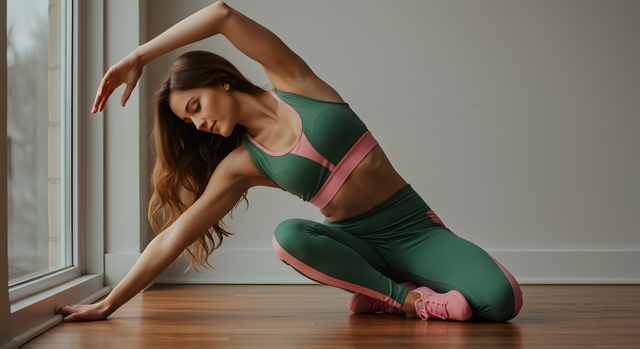
Postural stretching: principles and benefits for well-being is a discipline that goes far beyond a simple stretching routine. Developed in the 1960s by Jean-Pierre Moreau, a physiotherapist who worked with elite athletes, this method is a complete physical activity in its own right.
Contrary to popular belief, the benefits of postural stretching are numerous and profound. This practice considerably improves posture, especially that of the back, by stretching the spine and preventing the vertebrae from compressing. In addition, it tones the deep muscles, helps refine the figure, and can even relieve conditions such as scoliosis and lower back pain. Another major advantage is improved blood and lymph circulation, thereby promoting muscle oxygenation and the elimination of toxins.
What makes postural stretching particularly interesting is its accessibility to a wide audience. Indeed, this method is suitable for people of all ages, whether athletic or not. At Hello Soins, we see that more and more practitioners are incorporating this approach into their alternative treatments, recognizing its beneficial effects both physically and mentally.
In this article, we explore in depth the fundamental principles of postural stretching, its many physical benefits, its internal effects on the body, as well as its positive impact on mental and emotional well-being.
The fundamental principles of postural stretching
Based on strict principles, this body method stands out for its precise technique and holistic approach to the body. Let us examine the foundations that make postural stretching a unique practice in the world of well-being.
Origin and definition of the method
Born in the 1960s, postural stretching is the work of Jean-Pierre Moreau, a physiotherapist at the National Institute of Sport and coach of elite athletes. Its creation stemmed from an intuition about the importance of the postural and sustaining muscles in relation to dynamic muscles. This method, officially formalized in 1985 with the publication of his eponymous book, is now a registered trademark.
By definition, postural stretching is "a set of self-stretching postures and breathing techniques whose aim is to promote tonic regulation through deep muscle contractions." It is a global static technique that acts mainly on the postural musculature located in the back.
Differences from classic stretching
Contrary to popular belief, postural stretching has nothing to do with traditional stretching. While the latter focuses on stretching an isolated muscle, postural stretching works on entire muscle chains — the set of muscles linked to the joints mobilized during our daily movements.
This method alternates two types of exercises:
-
Tonic stretches that work the postural muscles through voluntary contractions
-
Heavy stretches that promote muscle relaxation by using gravity
During a session, the student is verbally guided by the teacher, thus ensuring precision in the postures and preventing improper movements. This constant supervision is one of the method’s distinctive features.
Who is this practice for?
Postural stretching is accessible to almost everyone. Indeed, this discipline can be practiced by people of all ages and physical conditions. Particularly beneficial for people suffering from back problems, it is suitable for both beginners and experienced athletes.
Contrary to certain misconceptions, it is not necessary to be flexible to start. Moreover, in the practice of postural stretching, there is no particular range of motion to achieve — everyone progresses according to their abilities.
Only very young people (because of the concentration required) and those suffering from obesity (risk of injury) do not necessarily have the right profile for this practice. In addition, this method is perfectly suited to pregnant women, who can practice it up to the last week of pregnancy.
The physical benefits of postural stretching
The human body gains many advantages from postural stretching, a method that acts deeply on our physical structure. This technique, alternating tonic and passive postures, offers a range of concrete and measurable benefits.
Improved posture and alignment
Postural stretching works on the entire muscle chains rather than on an isolated muscle, making it possible to effectively correct body alignment. Indeed, this method rebalances the muscle tensions responsible for poor posture. In addition, the precise exercises in each posture compensate for the imbalances created by our daily habits, especially the time spent sitting in front of screens. Regular practice helps restore a natural, aligned posture, making it possible to stand straighter and reduce postural fatigue.
Strengthening of deep muscles
Contrary to popular belief, postural stretching is not just a method of passive stretching. It actively strengthens the deep postural musculature — those essential muscles that keep us standing without us having to think about it. Tonic postures particularly engage the back, abdominal, and gluteal muscles. This technique therefore strengthens the deep muscles that support the spine, thereby improving the body’s overall stability.
Flexibility and joint mobility
The Moreau method places particular emphasis on deep flexibility and joint longevity. The stretches practiced increase the range of motion and free the joints. Thus, postural stretching considerably improves mobility, helps one discover one’s bodily pattern, and facilitates joint freedom. This increased flexibility also reduces the risk of injury during everyday or sports activities.
Prevention of back pain
Lower back pain is a major public health issue. Postural stretching represents an effective solution to this problem. By stretching the postural muscles while strengthening the back, this practice relieves and prevents various spinal pains. It proves particularly beneficial for people suffering from lower back pain, back pain, or scoliosis, provided it is adapted to each condition. As a result, at Hello Soins, many practitioners recommend this method as a non-medicated therapeutic complement.
Internal effects on the body
Beyond the visible effects on posture, postural stretching acts deeply on the body’s internal systems. This practice positively influences several essential physiological functions to maintain optimal balance.
Stimulation of blood circulation
Postural stretching remarkably promotes blood circulation. A study published in The Journal of Physiology reveals that regular stretching improves blood flow and reduces arterial stiffness. In addition, this practice significantly lowers blood pressure. Indeed, stretching causes muscular pressure on the arteries of the legs and thighs, prompting the body to release chemical substances that dilate blood vessels.
This improvement in circulation is not limited to the lower limbs. Surprisingly, the benefits also extend to the arteries in the arms. Thus, postural stretching provides additional protection against cardiovascular disease, strokes, and even diabetes.
Improved breathing
Posture plays a decisive role in respiratory efficiency. Any bodily misalignment disrupts diaphragmatic function. By correcting posture, postural stretching allows the diaphragm to contract optimally.
Poor posture, especially head projection forward or rounded shoulders, compresses the rib cage and limits lung expansion. In addition, persistent muscle tension in the neck, back, and shoulders can reduce lung volumes and increase breathing rate.
Elimination of toxins via the lymph
The lymphatic system plays a crucial role in eliminating waste and toxins from the body. Unlike the blood system, lymph does not benefit from a central pump like the heart. Consequently, its movement depends essentially on our physical activity.
Stretching effectively stimulates lymphatic circulation. Stretching exercises create pressure differentials around the joint spaces where lymph nodes are concentrated. This phenomenon generates a pumping effect that facilitates the flow of lymph.
At Hello Soins, several practitioners recommend postural stretching precisely for its detoxifying effects. The deep breathing associated with this practice changes abdominal and thoracic pressure, encouraging the return of lymph to the blood system.
A tool for mental and emotional well-being
Postural stretching is not limited to its physical effects; it is also a true tool for nourishing our mental and emotional balance. This dimension, often underestimated, is nevertheless one of the main strengths of this practice.
Reduction of stress and tension
When we are stressed, our muscles naturally tense up. Postural stretching acts directly on these tensions accumulated in specific areas such as the neck, shoulders, and upper back. According to Dr. Herbert Benson, a pioneer in mind-body medicine, "stretching activates the body’s relaxation response, which is the opposite of the stress response. It helps reduce heart rate, blood pressure, and breathing rate, which are often elevated during periods of stress."
Indeed, this practice stimulates the release of endorphins, natural pain relievers that also act as mood enhancers. In addition, postural stretching activates the parasympathetic nervous system, also known as the "rest and digest" system. This mechanism reduces the fight-or-flight response and brings the body back into a state of balance.
Better concentration and refocusing
During a session, postural stretching requires special attention that forces us to stay in the present moment. This discipline reconnects us to our body and our sensations, making it impossible to let our mind wander to everyday problems. Thus, we release our thoughts while developing our ability to concentrate.
The upright, aligned posture provided by this practice also improves blood flow to the brain, thereby optimizing cognitive functions. Moreover, constant breathing control makes it possible to best manage our physical and mental state during the session.
A lasting sense of relaxation
Regular practice of postural stretching teaches the body to recognize its areas of tension and gradually release them. This increased body awareness becomes a valuable daily tool. In particular, one learns to identify the specific places where tension accumulates.
A particularly interesting point for practitioners listed on Hello Soins is the complementarity of postural stretching with other well-being approaches. Indeed, this method fits perfectly into a global therapeutic path, strengthening the effectiveness of other alternative treatments such as sophrology or naturopathy.
Conclusion
Postural stretching therefore represents much more than a simple series of stretching exercises. This holistic method, developed by Jean-Pierre Moreau, is a true treasure for our overall health. Indeed, its benefits range from improved posture to deep muscle strengthening, including better joint flexibility.
In addition, we have seen that this practice acts simultaneously on several vital systems. It stimulates blood circulation, optimizes breathing, and promotes the elimination of toxins via the lymphatic system. Thus, the whole body benefits from more harmonious functioning.
Beyond the purely physical aspects, postural stretching also proves to be a powerful ally for our mental and emotional balance. It considerably reduces stress, improves our concentration, and provides a lasting sense of relaxation. This psychological dimension makes postural stretching a truly complete practice.
At Hello Soins, we are convinced of the benefits of this method. That is why many practitioners specialized in postural stretching are available on our premium platform. These professionals can accompany you in discovering or deepening this discipline. Thanks to our optimized appointment-booking system, you can easily access the best available time slots while benefiting from personalized follow-up via our integrated chat.
Ultimately, whether you suffer from chronic pain, are looking to improve your posture, or simply want to relax deeply, postural stretching certainly deserves a place in your well-being routine. This accessible, adaptable, and complete practice could well transform your relationship with body and mind, one stretch at a time.